Low-Maintenance Garden Ideas Adelaide — Real Solutions
Real low-maintenance garden ideas for Adelaide — plants that survive on rain, hardscape that lasts, and design choices that minimise work.
Published 9 May 2026 · Landscaping Quotes
Low-Maintenance Garden Ideas for Adelaide Homes
Most “low-maintenance” gardens at the time of design are mid-maintenance gardens by year three. Plants outgrow their spaces, weeds colonise neglected mulch, irrigation needs servicing, and the original tidy look has slipped.
Real low-maintenance design takes more thought, not less, at the design stage. The choices that pay off:
Strategy 1 — Pick plants that don’t need you
Adelaide’s climate punishes high-input gardens. Drought-tolerant natives and Mediterranean species, once established, run on rainfall alone. They don’t need fertilising, they don’t need pruning more than seasonally, and they don’t need replacing because of summer death.
A garden mostly planted with:
- Lomandra (any variety) — indestructible
- Westringia (clipped or natural) — drought + sun + wind tolerant
- Banksia and grevillea — long-flowering, no inputs
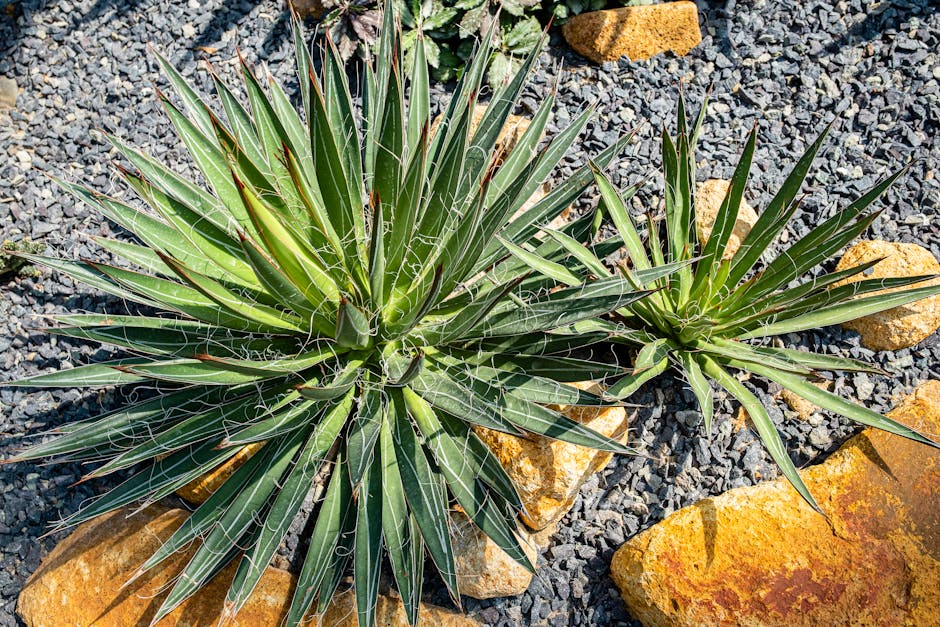
- Agave or aloe — set-and-forget
…needs perhaps four hours of attention a year once established. Mostly seasonal pruning and a mulch top-up.
Strategy 2 — Hardscape what you would otherwise mow
Lawn is the highest-maintenance element in any Adelaide garden:
- Mowing every week through spring (about 30-40 hours/year for a typical backyard)
- Fertilising 2-3 times annually
- Watering through summer
- Edging beds
- Top-dressing every few years
A garden with no lawn drops 30+ hours of annual work. Replace lawn with:
- Paved area for outdoor living (where you’d actually walk)
- Decomposed granite or gravel in transitional zones
- Mass-planted ground covers in beds (myoporum, native pigface, dichondra)
If you must keep some lawn, make it small (under 20sqm) and well-defined. Tiny lawns get worn quickly; medium-small lawns are easiest.
Strategy 3 — Mulch heavily and consistently
A 75-100mm layer of chunky mulch (jarrah chip, eucalyptus, pebble) over every garden bed delivers:
- 70% reduction in evaporation
- 90% suppression of weeds
- Slow improvement of soil structure as it decomposes
- Cleaner look (the dark mulch makes plants pop)
Top-up mulch annually (typically autumn). Costs about $50-100 per cubic metre supplied, plus delivery.
Strategy 4 — Drip irrigation on a smart controller
Hand-watering is the second-largest time sink in Adelaide gardens. Replace with:
- Drip lines in every bed (low-pressure emitters at plant base)
- Smart controller (Hunter Hydrawise, Rachio, Rain Bird LNK) — adjusts to weather forecast, skips after rain
- Two zones minimum — vegetables/high-input on one zone, established plantings on another (less frequent)
Once installed and seasonally adjusted, the system runs itself. Annual maintenance: check emitters for clogging (10 minutes), update seasonal program (5 minutes).
Strategy 5 — Rectangular beds and clean edges
Curving beds, organic shapes, and casual edges look romantic but require constant edging. Rectangular beds with hard edges (concrete, steel, brick) hold their shape for decades.
The edge-maintenance gap between a steel-edged rectangular bed and a curved natural-edged bed: the rectangular bed needs zero edging; the curved bed needs 20-30 minutes per month.
Strategy 6 — One feature tree, mass planting elsewhere
A garden with five different specimen trees needs five different pruning regimes. A garden with one specimen tree and mass-planted shrubs/grasses around it needs one pruning regime.
Mass plantings of the same species:
- Read as design (rather than randomness)
- Need uniform care (one pruning approach, one watering schedule)
- Replace easily if one plant fails
Strategy 7 — Avoid high-input plants
Low-maintenance lists what NOT to plant in Adelaide:
- Roses — prune annually, fertilise quarterly, spray for black spot
- Hedge box (English/dwarf) — clip 2-3 times a year, susceptible to box blight
- Hydrangeas — water-thirsty, tip-prune annually
- Vegetables — daily attention through growing season
- Fruit trees (most) — annual pruning, pest management, harvesting
- Lawn that needs scarifying — annually for buffalo, less for kikuyu
If you love any of these, fine — just know they’re commitments. A “low-maintenance” garden built around them isn’t.
What stays low maintenance for life
- Native and Mediterranean plant palettes
- Hardscape > lawn
- Mulch deep, mulch annually
- Drip irrigation, smart controlled
- Strong geometry, hard edges
- Mass plantings of robust species
A worked example — 100sqm low-maintenance garden
For a typical Adelaide backyard, 10m × 10m:
- Paved area: 4m × 6m bluestone paving for outdoor dining (24sqm)
- Decomposed granite: 2m × 6m path/transition area (12sqm)
- Garden beds: 4m × 10m planted bed (40sqm) + perimeter beds (24sqm)
- One feature tree: Pyrus calleryana “Capital” (columnar ornamental pear)
- Mid-storey: 8 × Westringia “Smokey” clipped to 1m
- Lower: 30 × Lomandra “Tanika” mass planted
- Ground cover: Native pigface in the harshest sun
- Mulch: 100mm jarrah chip throughout
- Irrigation: drip on smart controller, two zones
Annual maintenance estimate: 8-10 hours total. Mostly mulch top-up in autumn, light prune of Westringia in winter, and a half-hour every 6-8 weeks for tidying.
Cost to install: $25,000–$35,000.
Get a free quote
Low-maintenance is a design problem before it’s a planting problem. Request a free design quote and mention your maintenance preference — Adelaide designers will scope a plan that suits.
Get a free landscaping quote
Tell us about your project and we'll get back to you within 24–48 hours. No obligation.